
At a glance
-

Course Location
Your Country
-

Course Dates
As agreed with each partner
-

Duration
Normally 1-4 weeks
-

Arrival days
Weekends
-

Class Size
Maximum 16 students (average 13)
-

Student Age
Young learners from 8+ to young adults
-

Individuals and Groups
As agreed based on local regulations
-

Entry Requirements
Catering for all language levels
-

Afternoon Workshops
4-5 afternoon workshops per week
-

Accommodation
As agreed with each partner


Programme Introduction
Bring the Future Learning Experience to Your Students!
Since 2013, Future Learning has welcomed thousands of young learners to Ireland and the UK for something quite different: an English programme built not around grammar drills and textbooks, but around real projects, real technology and real communication. Our students don’t just study English – they use it, from the first morning to the final presentation.
Through our Transnational Education (TNE) programme, Future Learning brings this established learning experience directly to students in their own country.
Under the TNE model, Future Learning provides our own teachers, our own curriculum and our own project-based methodology, delivered on location in partnership with established Educational Tour Operators.
Students experience the Future Learning approach without the cost, visas and practical challenges of international travel — while partners can offer a distinctive international education programme within their own market.
It is more than an English course. It is a genuine cultural exchange, bringing a piece of Ireland and the UK to students wherever they are.
A proven International Programme
Future Learning has been delivering TNE programmes internationally since 2017, with programmes previously delivered in multiple destinations.
With this established experience behind us, Future Learning is expanding its TNE programmes to new international destinations.
A proven model, not an experiment.
Learner Profile
The TNE programme is designed for young learners and young adults aged 8+, with courses organised according to age and English level.
Students benefit most from an A2 level of English and above, while a simplified project format is available for A1 learners.
Classes are organised in advance by Future Learning according to students’ age and English level, ensuring that valuable course time can be dedicated to learning and project work. Classes have a maximum of 16 students, with an average class size of 13.


Learner Outcomes
By the end of the programme, students will have developed more than their English language skills.
They will have:
- strengthened their communication and collaboration skills
- developed greater confidence in expressing and presenting ideas in English
- gained practical experience using digital tools for research, creation and presentation
- developed their creative and critical thinking
- worked effectively as part of a project team
- completed and presented a digital project
- developed greater awareness of responsible and effective use of technology and AI
- received a Future Learning end-of-course certificate documenting their English level and teacher evaluation of Communication, Collaboration and Technology skills


Samples of STEAM+AI Project Themes
Each TNE course is built around a central project theme, recommended by Future Learning’s academic team according to the age and English level of the group.
Grammar and vocabulary are taught in the context of the project, making language learning purposeful and connected to what students are actually doing. Themes are adapted to the local venue and group, while the Future Learning methodology remains consistent.
Identity & Culture
Explore Irish life and culture, compare it with students’ own cultures and develop a deeper understanding of different perspectives.



Stories & Drama
Explore Irish legends and develop an original short film — from scripting to recording and editing.
Digital Citizenship
Explore digital footprints, identify misinformation and create an online awareness campaign.


Future Work
Develop teamwork and creativity while creating and presenting a marketing pitch for an original invention.


Environment & Sustainability
Explore the story of a landscape and develop ideas about what should be protected and how.


The AI Dimension
Learning to use AI — responsibly and creatively.
Future Learning has integrated the ethical use of AI-powered tools into its project-based approach.
On TNE courses, students gain structured, hands-on experience using AI as a creative partner in areas such as design, music and communication.
At the same time, students explore important questions around originality, bias, dependency and safety. They learn to question AI-generated information and, importantly, to use their own creativity and thinking as the starting point for their work.
AI is therefore used to support learning, not to replace it.
A Typical Day
Each course day is built around three connected learning sessions, creating a continuous link between language development and project work.
Morning Session 1
Written Skills & Digital Journal
Students record and reflect on their learning using age- and level-appropriate digital tools, developing their written accuracy throughout the programme.
Morning Session 2
Spoken Communication
Focused speaking activities prepare students for the language they will need to use during the day’s project.
Afternoon
Project Workshops
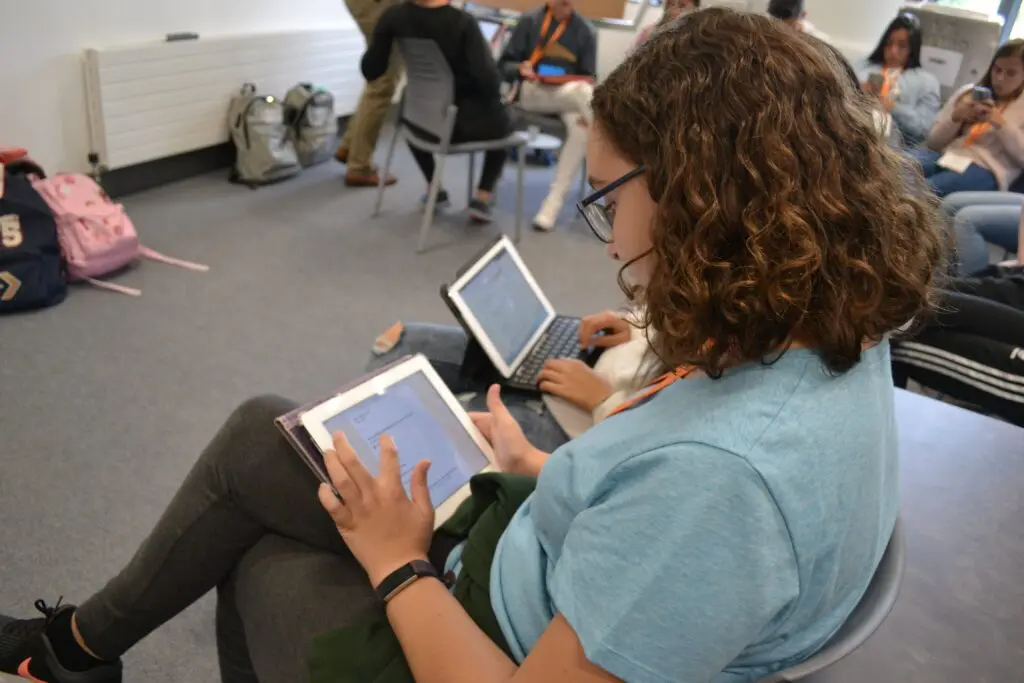
Students put their language into action through hands-on, collaborative work — making, doing, performing and creating.
The following morning, students return to their digital journals to reflect on and develop their learning.
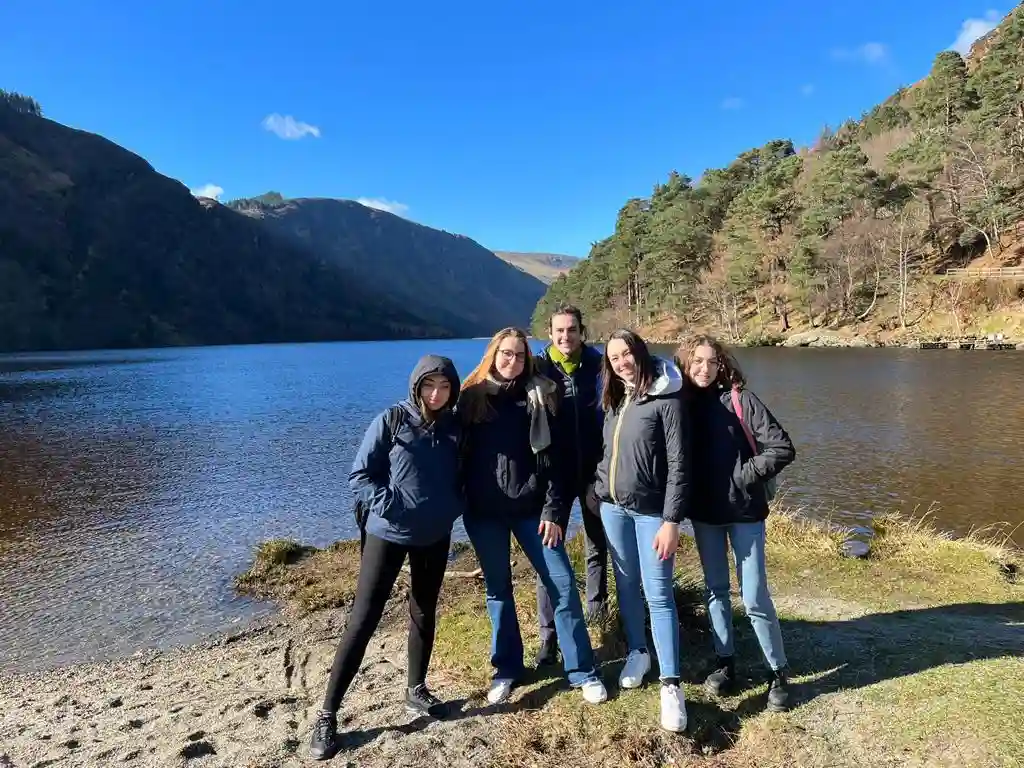


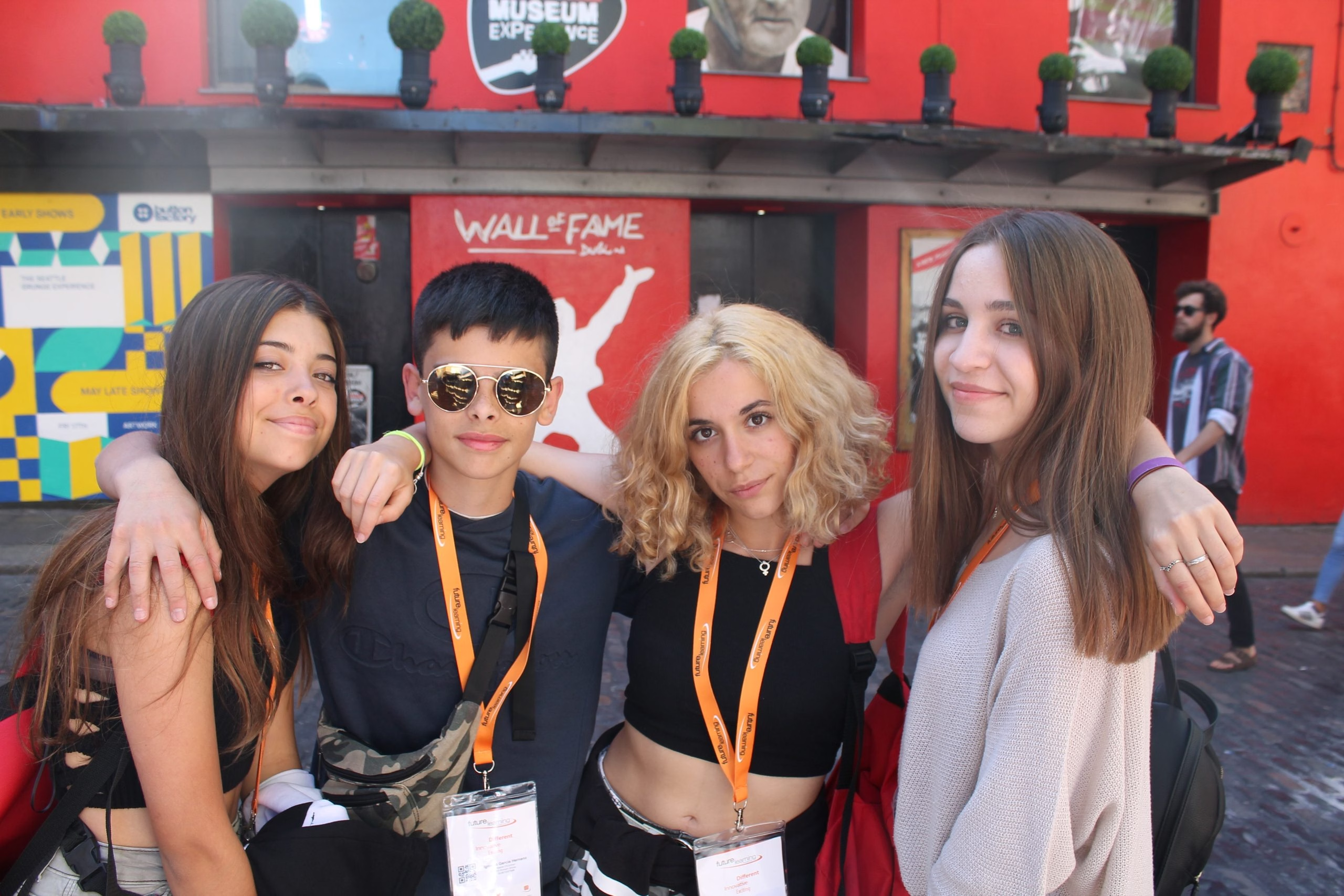
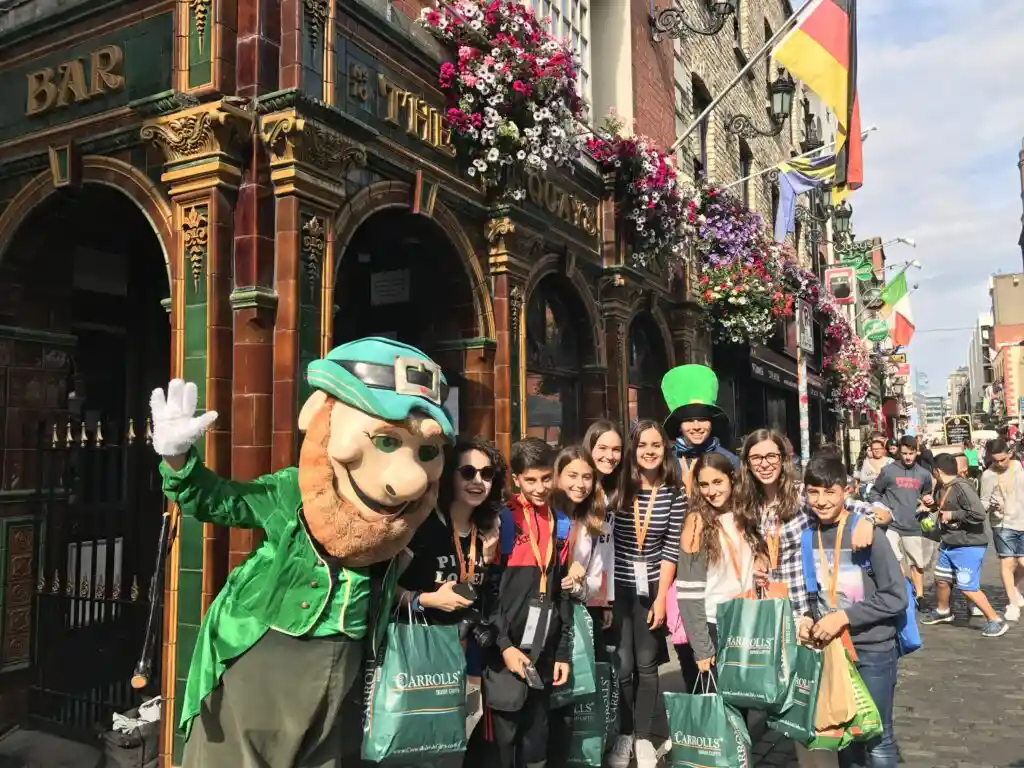
Excursions
- As agreed with each partner
- Example visits: excursions to landmarks based on requests
Why Future Learning?
A Specialist, Not a Generalist
Future Learning is a Technology Enhanced English Language School, specialising in teaching English through collaborative digital media projects since our foundation in 2013.
Our approach combines English language development with project-based learning, digital skills, communication, collaboration and creative and critical thinking.
Future Learning Schools are EAQUALS-accredited English language schools and Quality English Schools. We also have extensive experience delivering summer, winter, high school and mini-stay programmes across Ireland throughout the year.
TNE is not a side project — it is an extension of what we do every day.